Restorations Healthcare
The terms dependence and tolerance are often confusing when talking about addictions. It’s helpful to understand the stages of addiction to best understand the relationship between dependence and tolerance. Read on to learn more about these important concepts and how they apply to the recovery journey.
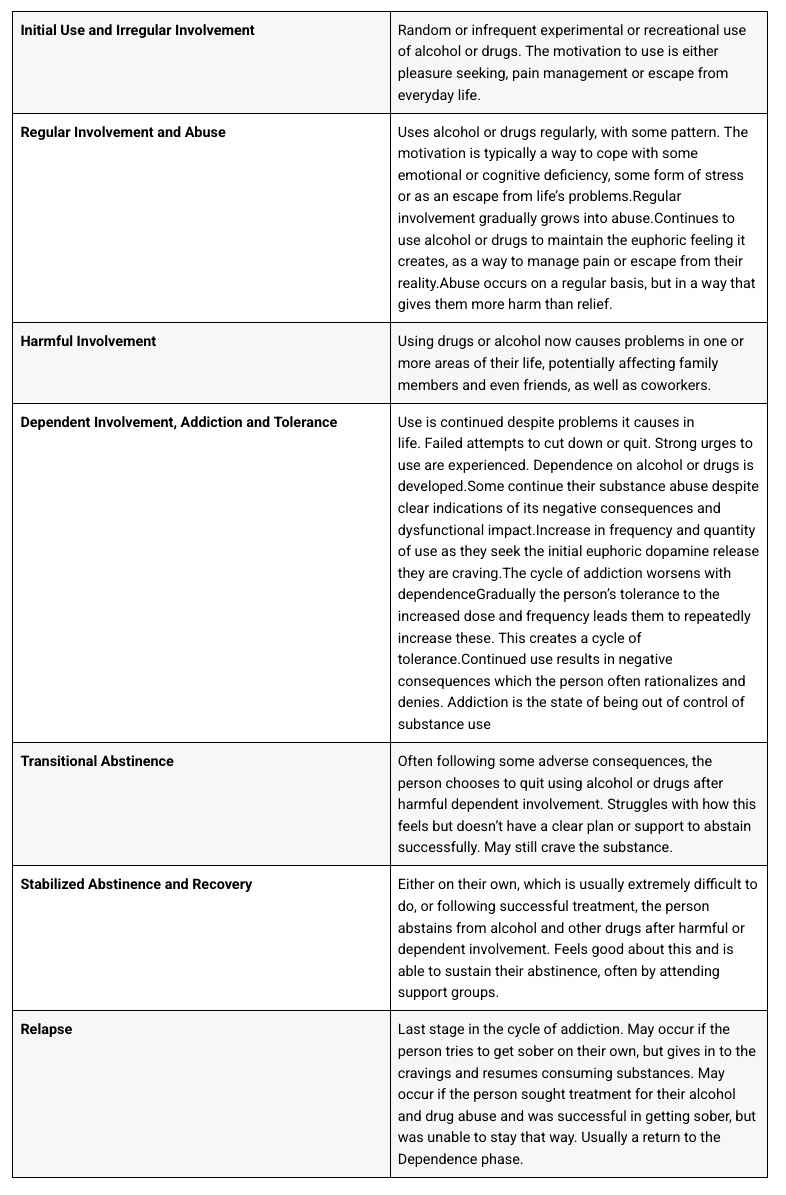
Understanding the Stages of Addiction
Everyone struggling with addiction is involved in a unique journey. Nonetheless, there are different models to describe this, many from the perspective of alcohol use disorder. Here is one way of describing this process. It’s important to note that most people don’t go through this cycle in a linear way, but rather cycle between stages as they move towards recovery.
What is Dependence?
Dependence most often refers to a physical dependence on a substance. It is characterized by symptoms of tolerance and withdrawal, often cycling between them.
Physical dependence is when the body adapts to a substance’s presence. It may lead to withdrawal symptoms if usage abruptly ends or is reduced. However, it’s possible to develop dependence on many drugs such as Paroxetine (Paxil) but not be addicted to them.
While we usually think of physical dependence, it’s possible to also have psychological dependence. For example, using alcohol to manage stressful moments but not otherwise
The Role of Dependence on Addiction
Addiction is a chronic disease that involves behavioral changes which arise from using a substance. As well, it involves various changes in the brain’s neural pathways. Addiction causes cravings, compulsive behavior and changes in the brain. It occurs when a person has difficulty stopping substance abuse or another behavior they compulsively engage in, despite adverse consequences.
Dependence becomes a problem when people continue using a substance despite its use causing harm, or when the risks outweigh the benefits. In other words, when it is not just dependence but addiction, or when severe withdrawal symptoms make stopping a non-beneficial medication difficult [1].
Unlike addiction, physical dependence does not necessarily involve difficulty controlling behavior. But dependence very often can be a step towards addiction.
Signs of Dependence
If you stop or cut down on using the substance and begin to go into withdrawal, then you are physically dependent on taking the substance to avoid this.
What Can You Be Dependent On?
Dependence may happen even if following a doctor’s legal drug prescription. Common drugs that people develop a dependence with include:
- Nicotine
- Caffeine
- Beta blockers
- Benzodiazepines
- Antiepileptics
- Antidepressants
What is Tolerance?
Tolerance is when the body and brain acclimatize to a substance such that the response to it lessens over time. This usually means you need higher and higher doses to get the same effect. It can happen with both recreational and prescription drugs. Tolerance levels are largely determined by the person’s size, weight, sex, age and other functions such as liver health where most drugs are metabolized.
Role of Tolerance on Addiction
You can develop a tolerance for a drug but not become addicted to it. However, developing tolerance is a phase in the addiction cycle. It can be very dangerous because the person often increases the amount of drugs they are taking which may lead to an overdose. Similarly, if someone voluntarily tries to withdraw from a drug and then returns to using, they may overdose as their body no longer has the same tolerance it previously did.
Signs of Tolerance
Needing more and more of a substance to get the same effect is the primary sign of tolerance.
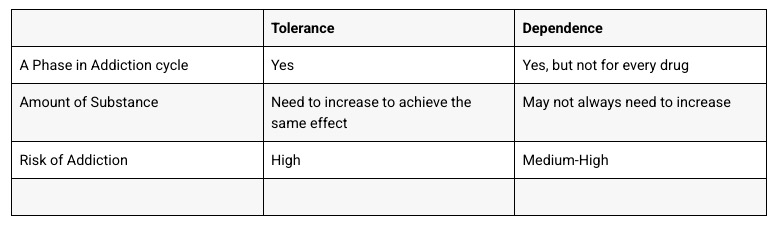
Tolerance vs Dependence
When to Seek Help
If you find that using substances is out of your control then you should seek help. Or if you are trying to withdraw on your own but can’t, it’s best to have help. The transition from tolerance to dependence and addiction can be subtle. Here are some signs that indicate you should seek help [2]:
- You keep taking prescription medications such as pain relievers but don’t need them anymore
- You need higher doses to achieve the same effects
- You constantly think about alcohol or drugs and make sure you know where to get them
- You are secretive about the fact you are drinking or taking drugs
- You lie and steal to obtain the substances
- You are risk-taking
- You have serious withdrawal symptoms if you skip a drink or dose
- You lose interest in things you enjoy
- You have trouble getting to work or school
Addiction Treatment Available in Anaheim, California
Located in Anaheim, California, Restorations Health Care can help you or a loved one overcome their addictions issues. Our mission is all about saving lives. We offer detox and inpatient treatment programs that help people get back on their feet. Our dedicated team of trained addiction professionals and counselors provides individualized addiction treatment programs for recovery. Reach out to our Admissions team now.